
Wild Food People

Wild Food Species Directory

This directory brings together key information on some of the most common, remarkable, and ecologically significant wild species found across the UK.

Many of these species are edible or have practical uses, while others are included due to their importance in conservation or their potential for misidentification with edible counterparts.

Each entry covers identification, preparation, and responsible use, ensuring that foragers, hunters, and anglers can make informed, sustainable choices. We also highlight species of ecological concern—whether due to declining populations, invasive status, or their role in maintaining biodiversity.

The information here is drawn from decades of hands-on experience in wild food gathering, professional foraging, and ecological study. Alongside traditional knowledge, we incorporate the latest research on wild species and their relationships with human health and the environment. This directory will continue to evolve as new insights emerge.

Compiled by Richard Prideaux and the Wild Food People team.

EDIBLE PLANTS

Edible species of plant that can be found in the British countryside. 

Click on each species for more information.

PIGNUT

Conopodium majus
Foraging Course North Wales

COMMON BEECH

Fagus sylvatica

WILD GARLIC

Allium ursinum

MEADOWSWEET

Filipendula ulmaria

STINGING NETTLE

Urtica dioica

WOOD SORREL

Oxalis acetosella
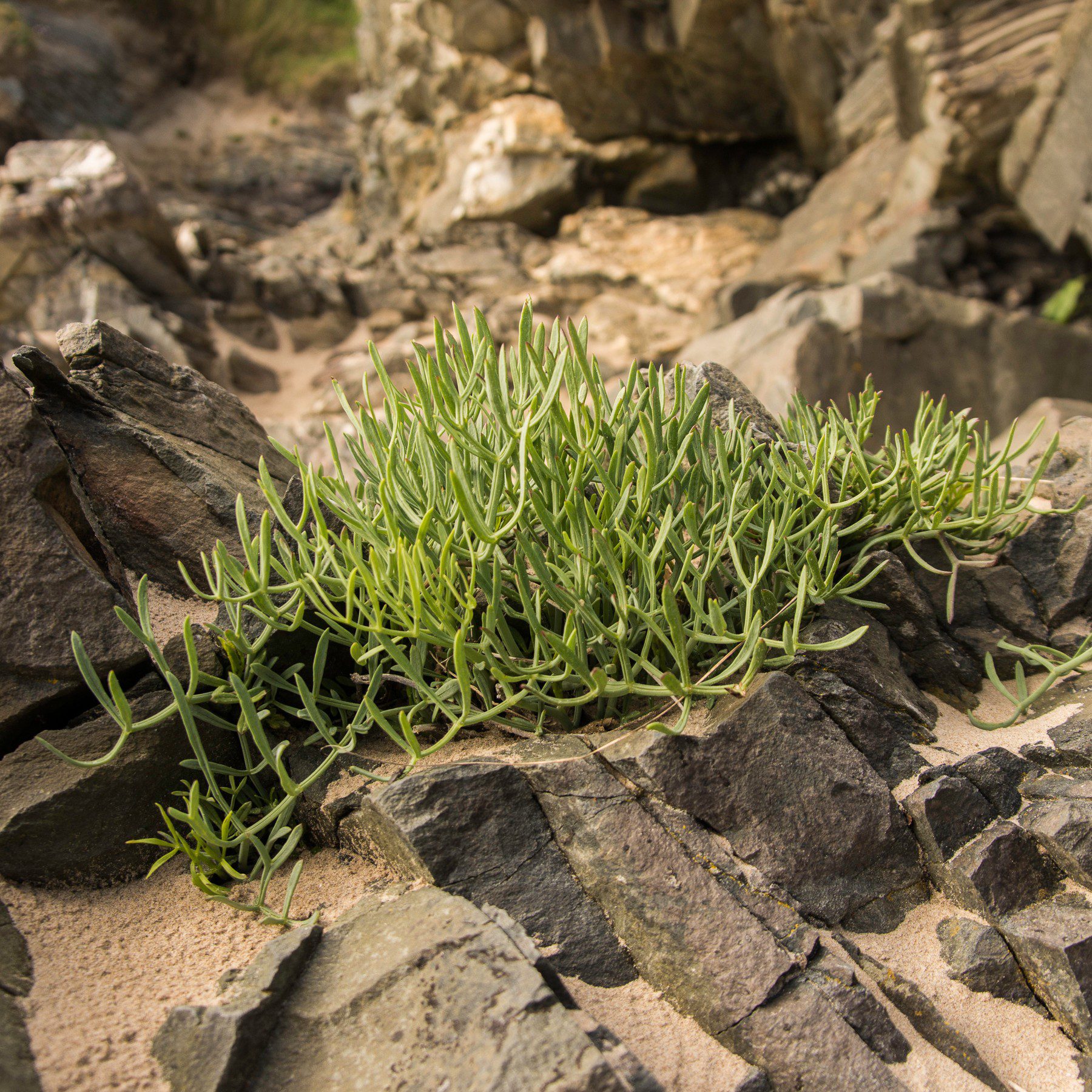
Rock Samphire on the coast North Wales foraging

ROCK SAMPHIRE

Crithmum maritimum

OPPOSITE-LEAVED GOLDEN SAXIFRAGE

Chrysosplenium oppositifolium

ELDER

Sambucus nigra

HAWTHORN

Crataegus monogyna

BILBERRY

Vaccinium myrtilus

MARSH SAMPHIRE

Salicornia europaea
blackberry

BLACKBERRY

Rubus fruticosus agg.
Ripe sloes

BLACKTHORN / SLOE

Prunus spinosa

SWEET WOODRUFF

Galium odoratum

HERB ROBERT

Geranium robertianum

EDIBLE TREES

Edible species of tree that can be found in the British countryside. 

Click on each species for more information.

Foraging Course North Wales

COMMON BEECH

Fagus sylvatica

ELDER

Sambucus nigra

HAWTHORN

Crataegus monogyna
Ripe sloes

BLACKTHORN / SLOE

Prunus spinosa

COASTAL EDIBLES

Edible species of plant, seaweed and shellfish that can be found in the British shoreline. 

Click on each species for more information.

MARSH SAMPHIRE

Salicornia europaea
Rock Samphire on the coast North Wales foraging

ROCK SAMPHIRE

Crithmum maritimum
Coastal foraging course north wales

COMMON LIMPET

Patella vulgata

COMMON PERIWINKLE

Littorina littorea

SHORE CRAB

Carcinus maenas

EDIBLE MUSHROOMS

Edible species of fungi that can be found in the British countryside. 

Click on each species for more information.

SCARLET ELF CUP

Sarcoscypha austriaca

CEP

Boletus edulis

WOOD EAR

Auricularia auricula-judae

TOXIC SPECIES

Toxic and lookalike species that you may come across while foraging.

CAUTION: There are commonly-found species in the British countryside that can be deadly if ingested. Foraging can be dangerous – you need to be sure that you only eat things that you have correctly identified as safe.

Click on each species for more information.

ARUM LILY

Arum maculatum

SMALL GAME

Small game species that can be legally harvested in the UK.

CAUTION: There are considerable legal, ethical and logistical challenges that come with trying to hunt for food in the UK.
It is up to you to do your own research and ensure that what you do is safe, legal and ethical.

Click on each species for more information.

PIGNUT

Conopodium majus

LARGE GAME

Larger game species that can be legally harvested in the UK.

CAUTION: There are considerable legal, ethical and logistical challenges that come with trying to hunt for food in the UK.
It is up to you to do your own research and ensure that what you do is safe, legal and ethical.

Click on each species for more information.

PIGNUT

Conopodium majus

FISH

Fresh and saltwater fish species that can be legally harvested in the UK.

CAUTION: There are considerable legal, ethical and logistical challenges that come with trying to fish for food in the UK – particularly with our freshwater fish species. 

It is up to you to do your own research and ensure that what you do is safe, legal and ethical.

Click on each species for more information.

PIGNUT

Conopodium majus