


Each year the Sloe harvest is a little bit different, there may be many small dry fruits one year, few but large and juicy fruits in another, and on the really good years the branches are weighted down with many plump and juicy fruits which ripen to become almost sweet.
This year something entirely different happened.
We are very lucky in that we are usually immersed in what is happening around us outside and we live in a rural area close to several different habitats. Back in summer as the berries began to develop I was regularly wandering out to check on the development of the fruits and the health of the hedgerows which I frequent come September, as well as checking on the various fruit trees which we talk about on our North Wales foraging courses. Back in 2020 there were very few ripe berries because of the long, hot summer but we are looking at a different problem this year.
Spring of 2023 the UK had a greater than average rainfall according to the ONS and data from 1991-2020, the plants around us grew vigorously through March and April. Everything became lush and green very quickly and when the fruit blossoms burst they were abundant and did not get caught out by late frosts. This was followed by a period of drought and then a fairly cool summer with a reasonable amount of rain, particularly compared to some recent years.
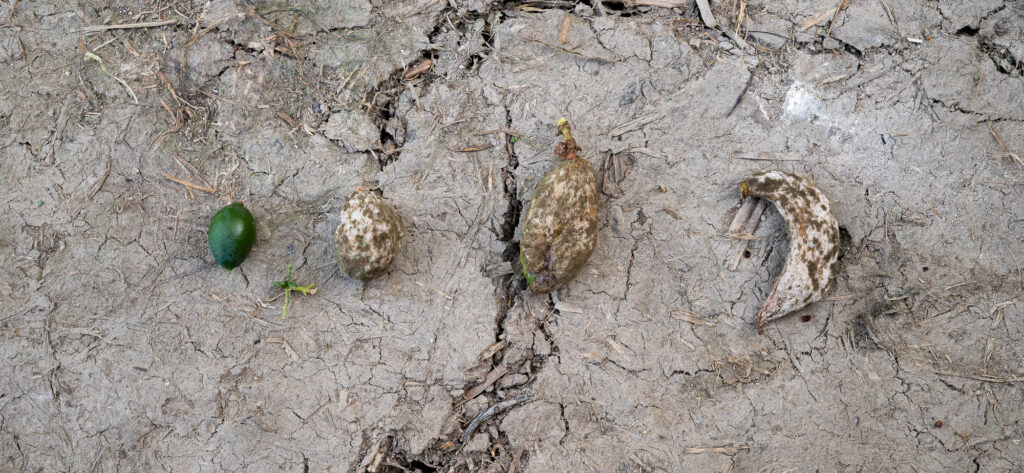
For the first time I noticed something unusual on the blackthorn trees in our hedge, it looked like a seed pod from another species had somehow grown on the wrong tree. I looked into it and found more and more people talking about it around the UK. After a quick bit of research it turns out that we have a gall forming fungus called Pocket plum operating in our locality.
Pocket plum is the common name for Taphrina pruni which causes deformities in the fruits of blackthorn (the ever precious sloes), damsons and some other plum species, and there is a related fungus Taphrina padi which affects Bird Cherry with similar symptoms. These fungi are in the same family as the now infamous Ash dieback and not well-understood, although they are notoriously difficult to prevent and treat as the spores are airborne. The recommended control method is to remove and burn all affected fruits (don’t worry, this isn’t a loss as they are simply hollow shells) as well as removing fallen fruits and dead leaves from the ground and burning them too. This action disrupts the lifecycle of the fungus and will reduce the number of spores on the ground able to infect the tree again next spring. Slightly ironically the presence of Pocket plum has been linked to the milder winter followed by a wet spring which, to be honest, I felt was a good thing after the last few years.
Now that we have reached September, the time of year for collecting native fruits, I am seeing the full blown effects of Pocket Plum. The local scrubby patches which are normally heaving with sloes have a sad looking crop this year with roughly half of the fruits looking like wizened and mouldy pea pods. This won’t just affect us as foragers but will also impact on our native fruit eating wildlife who are reliant on the calories from autumnal berries to get them through the cooler and less productive months. Some species such as both the Song and Mistle Thrush, hold Sloes in high regard and show a preference for them over some of the more expected candidates (blackberries, rose hips, elderberries etc) This is something that we’ll be remembering and taking into account when we are out gathering fruits, maybe there will be just a little bit less Sloe gin in production in our house this time around.
Every year Wild Food People run a calendar of foraging and wild food courses in North Wales.
From forests and meadows to seashore and coastal – all of our courses are focused on food, ecology and giving participants the confidence to go and find these foods for themselves.


We deliver expert foraging and wild food training as part of our wider work managing habitats in North Wales.
Every single one of our courses and events feeds back into improving those habitats, helping to provide healthy ecosystems for our local wildlife and communities.
To provide the best experiences, we use technologies like cookies to store and/or access device information. Full information can be found in our Privacy Policy