

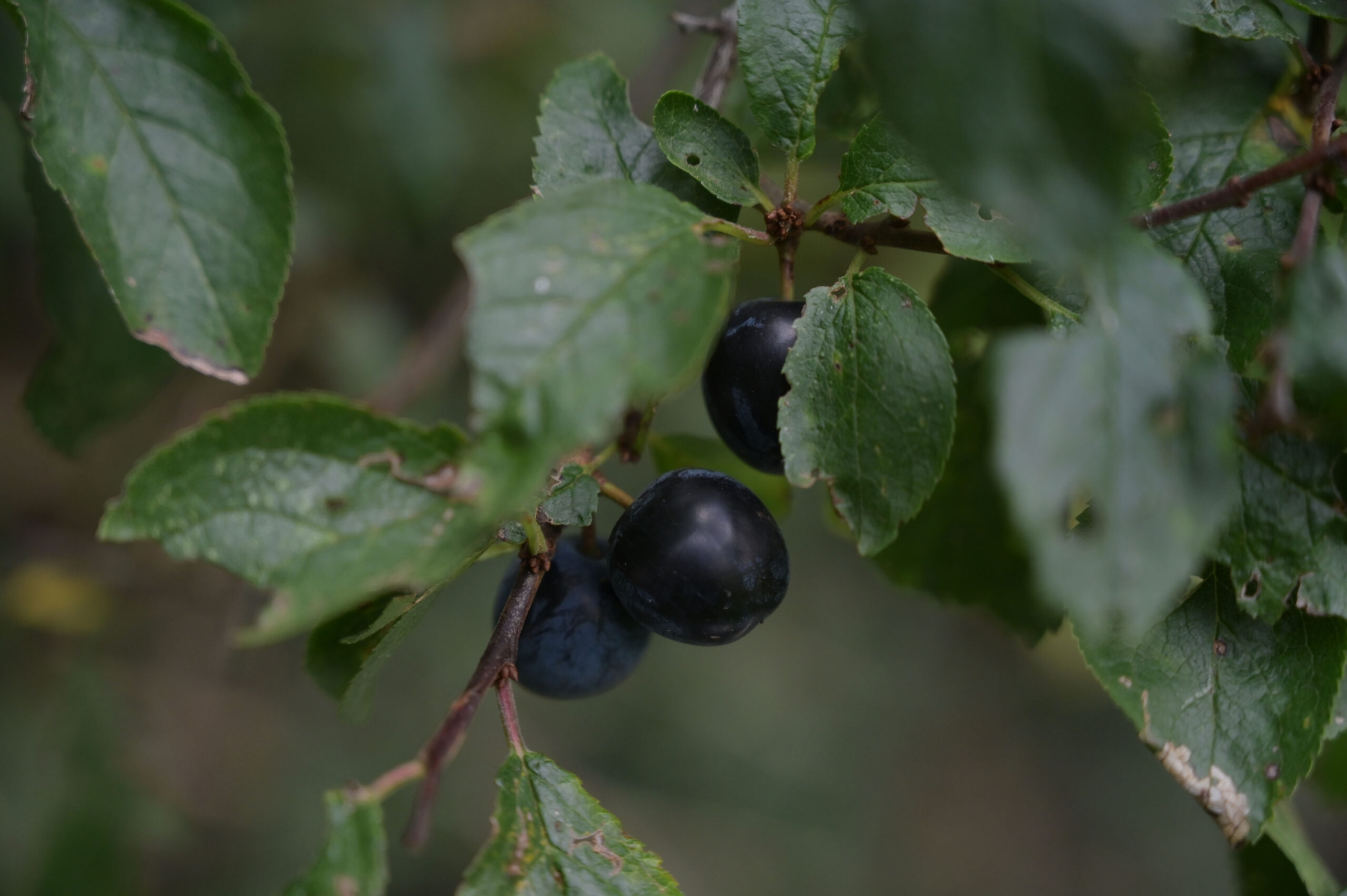


Traditionally sloes were picked after the first frost, and were then pricked before infusing into alcohols or made into jams and other preserves. This may sound like an old fashioned superstition with little scientific proof, but actually there is a lot of sense in it.
In a good year Sloes are best picked in Autumn as the fruit skin becomes thinner as the berry ripens and after the first frost (which was usually in October or November) the berries won’t ripen much more as there is generally less sunlight. During a frost the action of the water in the fruit freezing and then thawing also bletts the fruit, damaging the cell walls and releasing more of the juice within.
Sloes are the fruit of the Blackthorn (Prunus spinosa), a shrubby tree found commonly in hedgerows and forming impenetrable scrub across the UK. Related to plums, they have an astringent quality which sucks all moisture out of the mouth upon biting into the raw fruit. You may ask why it is that people target sloes so prolifically and keep the location of their best sloe patches a carefully guarded secret. The main reason is gin. Sloe gin is probably the most well known use for sloes and one of those recipes that it is hard to get wrong. The best versions of Sloe gin often occur when you have measured none of the ingredients and gathered the sloes in a location that you will never find again, but even when you don’t make an excellent batch, it will still be a good drink.
In order to get the most out of your sloes you need to get as much of the flavourful juice out as possible. Where this used to occur naturally in Autumn as the berries went through the freeze-thaw action of the first frost, nowadays most people prefer to use a freezer. Sloes are ripe far earlier than the first frosts these days, to check on the ripeness of these delicious berries, squeeze them gently between thumb and finger and feel them ‘give’ a little, as you would with any other stone fruits. They should also be a dark purplish/black colour under the cloudy bloom which coats the skin. The timing of this stage varies by a couple of weeks each year, as I write this I am planning my first sloe-picking of the year at a local patch, but last year I wasn’t out until October.
Collect what you need, take them home and give them a rinse to remove any unwanted critters or bits of muck, and then put into bags and freeze for at least one long night before using. The final step to really help is when you remove the bags from the freezer, allow them to defrost just a little and then rub the bag between your hands so that the sloes scrub against each other. This will break up the skins a bit more and in our experience functions as pricking the skins would, allowing the juice to escape that bit quicker when you start your infusion. Don’t worry about waiting for them to fully defrost before using either, you can put them straight into an infusion or gently heat to defrost if you are cooking with them.
Autumn isn’t just about foraging for Sloes, it is also the time of year to harvest other wild fruits such as crab apples, rowan berries, rosehips and elderberries. In our podcast episode about autumn foraging in the UK, Richard actually runs through the order which fruits become ripe from mid-summer onwards.
Every year Wild Food People run a calendar of foraging and wild food courses in North Wales.
From forests and meadows to seashore and coastal – all of our courses are focused on food, ecology and giving participants the confidence to go and find these foods for themselves.


We deliver expert foraging and wild food training as part of our wider work managing habitats in North Wales.
Every single one of our courses and events feeds back into improving those habitats, helping to provide healthy ecosystems for our local wildlife and communities.
To provide the best experiences, we use technologies like cookies to store and/or access device information. Full information can be found in our Privacy Policy